Evaluating Watercolor Pumpkin Bouquet Clipart for Seasonal Design Projects
When selecting visual assets for autumn-themed projects, designers and crafters often navigate a spectrum between traditional Halloween iconography and softer, harvest-inspired aesthetics. Watercolor pumpkin bouquet clipart occupies a specific niche within this spectrum, bridging the gap between spooky seasonal decor and elegant botanical illustration. Unlike standard vector graphics or cartoon-style pumpkins, watercolor floral pumpkins offer an organic texture and artistic nuance that appeals to audiences seeking sophistication over novelty. Understanding the distinct characteristics of these assets is essential for determining their suitability for applications ranging from baby shower invitations to textile patterns.
Distinguishing Characteristics of Watercolor Floral Pumpkins
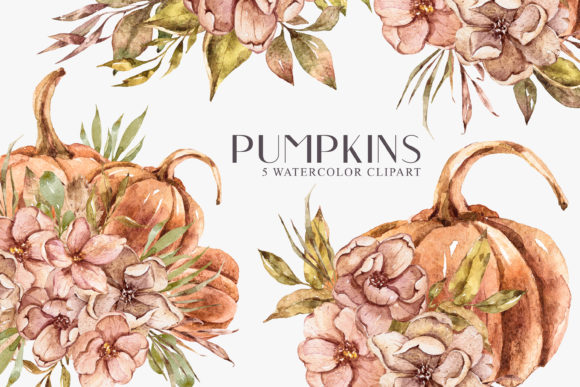
The primary differentiator of watercolor pumpkin bouquet clipart is the medium simulation. While digital vectors rely on clean lines and solid fills, watercolor assets retain the imperfections of traditional painting, including pigment bleeding, paper grain, and soft edges. This set specifically features high-resolution files at 3700 x 4700 pixels with 300 DPI, a specification that directly influences utility. Many generic clipart options are optimized solely for web use at 72 DPI, rendering them unsuitable for physical products. The 300 DPI standard ensures that when printed on bed linen, mugs, or scrapbooking paper, the image retains crispness without pixelation.
Furthermore, the composition matters significantly. A "bouquet" arrangement implies a pre-designed hierarchy where pumpkins interact with foliage and flowers. This differs from isolated pumpkin elements that require the user to manually construct a balanced composition. For users creating greeting cards or posters, a pre-arranged bouquet saves significant layout time. However, for those designing seamless textile patterns or requiring modular flexibility, a fixed bouquet may present limitations compared to sets offering individual, scattered elements.
Comparing Formats: Transparent PNG vs. Vector Alternatives
A critical decision factor in choosing clipart is the file format. This collection provides .png files with transparent backgrounds. When comparing this to vector formats like SVG or EPS, tradeoffs become apparent based on the intended end-use.
- Raster (PNG) Strengths: Watercolor effects are inherently raster-based. Converting genuine paint textures to vectors often results in a loss of authenticity or excessively large file sizes due to complex tracing. PNGs preserve the original artistic intent perfectly. They are ideal for direct printing on fabric, paper goods, and sublimation transfers where the texture is part of the design appeal.
- Vector Strengths: Vectors are infinitely scalable and editable. If a project requires resizing a pumpkin to fit a billboard or changing the color palette to match a specific brand identity, vectors are superior. Watercolor PNGs have fixed dimensions and colors; while 3700 x 4700 px is substantial, scaling beyond this limit will degrade quality.
- Hybrid Workflows: Professional designers often use high-res PNGs for the focal point (the pumpkin bouquet) but utilize vectors for typography and geometric borders. This approach leverages the organic feel of the watercolor art while maintaining technical precision for text.
For adult users evaluating resources, the choice depends on whether editability or textural authenticity takes precedence. For baby clothes and tote bags, the tactile look of the PNG usually outweighs the need for infinite scalability.
Application Suitability: From Digital Invites to Physical Textiles
The versatility of watercolor pumpkin bouquet clipart extends across digital and physical mediums, but performance varies by application. Evaluating fit requires understanding how the artwork interacts with different substrates and contexts.
Paper Products and Stationery
For Halloween and Thanksgiving invitations, greeting cards, and scrapbooking paper, watercolor florals provide a tone that is festive yet refined. Standard orange-and-black Halloween clipart can sometimes feel juvenile or aggressive. In contrast, floral pumpkins introduce muted tones and natural forms that work exceptionally well for adult gatherings, dinner parties, or upscale events. The transparent background allows these images to be layered over colored cardstock or textured digital papers without awkward white boxes, facilitating professional-grade stationery design.
Fabric and Merchandise
Printing on textile totes, baby clothes, and bed linen introduces technical considerations regarding color profiles and absorption. Watercolor designs, particularly those with soft washes and varying opacity, translate beautifully to fabric because they mimic dye penetration rather than sitting on top of the material like plasticized vinyl. However, users must verify that the source file uses CMYK or a properly calibrated RGB profile intended for print. The 3700 x 4700 px dimension is generally sufficient for adult apparel and home textiles, though it may require tiling or careful placement for larger surface areas like duvet covers.
Baby Shower and Nursery Decor
This category represents a unique intersection where watercolor pumpkin bouquets excel. Traditional Halloween imagery is rarely appropriate for newborns, yet autumn babies still deserve seasonal acknowledgment. Floral pumpkins strip away the "scary" connotations, leaving only the warmth of the harvest season. The soft edges and natural color palettes align with current nursery trends favoring biophilic and gentle aesthetics. When comparing options for this demographic, watercolor florals consistently outperform cartoon alternatives in terms of longevity and style relevance.
Evaluating Quality and Technical Specifications
Not all clipart labeled "watercolor" meets professional standards. When assessing this specific set or similar alternatives, several technical benchmarks should guide the evaluation process.
- Resolution Integrity: Verify that the 300 DPI claim is native, not upscaled. Upscaling a low-resolution image via software does not add detail; it merely blurs existing pixels. Genuine 3700 x 4700 px files at 300 DPI allow for prints up to approximately 12x15 inches without quality loss.
- Transparency Cleanliness: Inspect the alpha channel. Poorly processed PNGs often have jagged edges, gray halos, or residual background noise. High-quality assets feature smooth anti-aliasing that blends seamlessly into any background color.
- Color Consistency: In a set of five cliparts, ensure the lighting direction, saturation levels, and brushstroke styles are consistent. Disjointed sets make it difficult to create cohesive collections for scrapbooking or product lines.
- Licensing Clarity: Usage rights vary significantly. Some licenses permit personal use only, while others allow commercial application on physical products but prohibit digital redistribution. Always confirm that the license covers your specific intent, especially for items like fabric prints or sold greeting cards.
Decision Factors: When to Choose Alternative Resources
While watercolor pumpkin bouquet clipart offers distinct advantages, it is not universally optimal. Recognizing when to pivot to alternative resources prevents frustration and wasted budget.
Choose Alternatives If:
- You Need Minimalist Branding: Corporate identities often require flat, bold graphics that reproduce reliably at small sizes (e.g., app icons, embroidery patches). Watercolor details can disappear or muddy at reduced scales.
- Customization Is Mandatory: If the client demands a specific shade of purple or a different flower variety within the bouquet, a static PNG cannot accommodate this. Commissioning custom art or purchasing layered PSD/AI files would be necessary.
- Seamless Pattern Creation Is the Goal: While bouquets can be used in patterns, they are not seamless repeats themselves. Dedicated seamless pattern files or scattered element sets are more efficient for textile manufacturing.
- Budget Constraints Are Extreme: Free resources exist, though often with lower resolution or restrictive licenses. For hobbyists testing concepts before investing, free alternatives serve as adequate placeholders, provided final production uses licensed, high-res assets.
Practical Integration Strategies
Maximizing the value of watercolor floral pumpkins involves thoughtful integration rather than simple placement. Experienced designers recommend treating the clipart as a foundational layer rather than the entire design. Pairing the organic shapes with structured serif typography creates visual tension that elevates the overall aesthetic. For scrapbooking, using the bouquet as a corner anchor leaves negative space for photographs, preventing visual clutter.
In textile design, consider the scale relative to the garment. A massive 3700px bouquet might overwhelm a baby onesie but serves as a stunning centerpiece for a throw pillow. Testing print sizes digitally before committing to production helps avoid proportion errors. Additionally, blending modes in design software can help integrate the clipart into textured backgrounds, making the digital asset feel more physically grounded.
Ultimately, the decision to utilize watercolor pumpkin bouquet clipart hinges on the desired emotional resonance and technical requirements of the project. By weighing the authentic texture and pre-composed convenience against the limitations of raster formats and fixed compositions, creators can make informed choices that enhance both the creative process and the final output. Whether crafting a delicate Thanksgiving invitation or a durable canvas tote, understanding these nuances ensures the selected resource supports rather than hinders the design vision.